Unintended Consequences
and the Digital Age
Artist Statements
Daniel Henderson, The Art of Invention
My art explores the viral allure of technology and its unintended consequences.
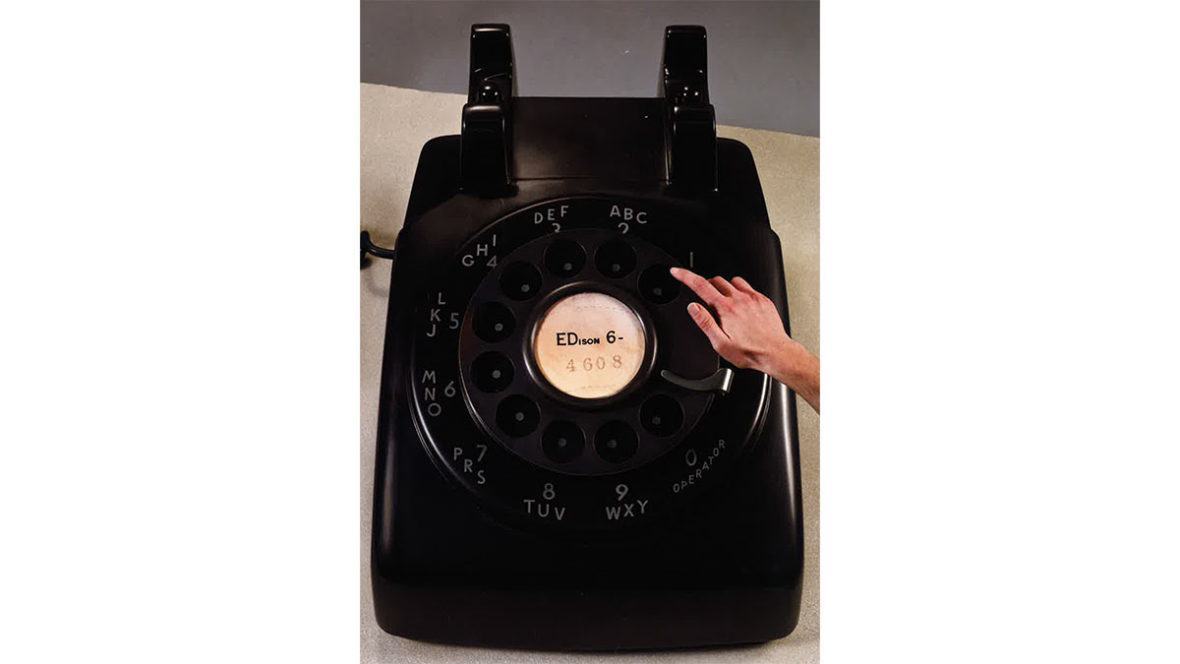
I am a sculptor and an inventor who developed the wireless picturephone. Invention, like sculpture, is an artistic endeavor. Although the two disciplines utilize different mediums of expression, both share the ability to affect our perception and how we interact. My sculpture memorializes the impact that art and technology have on humanity.
In our lifetime we have witnessed the birth of the microchip, the internet, the ATM, video games, caller ID, the personal computer, the digital camera, and the portable cellular telephone. These ingenious machines and systems have conquered great human challenges, but not without unintended consequences.
In 2007 a prison guard utilized a cellular telephone to video the execution of Saddam Hussein and it quickly spread across the world via the internet, easily seen by our children. This event propelled me to think deeply about the use of technology and how it connects us inter-culturally yet somehow divides us interpersonally.
We should consider the ethics of products manufactured with toxic disposable materials. In a world of virtual reality with email, text messaging, and internet shopping, we are confronted with the decline in face-to-face communication, the erosion of community, and the expectation of instant gratification. I want people to talk about technology – rather than merely use technology to talk.
The scale of the sculpture both amplifies the form and functional design elements of the original objects while creating tension for the viewer unable to use them. The permanence of iconic products sculpted in stone represents the connection with the natural world and contrasts with the temporality of technology and the materials they are built from. The work is symbolic of the Art of Invention and the permanent alteration to the human landscape.
Shaurya Kumar, The Lost Museum…
“Anybody who isn’t scared just thinking about what’s happening?”
– Richard R. Rowe
While the new digital technology revolutionizes every aspect of the society, it leads us into a world, which is often defined as a “Post” society: Post – Historic, Post – Religious, Post – Civilized, Post – Industrial, Post – Capitalist and Post – Modern.
Some claim that we are experiencing a new society, variedly known as an information society, knowledge society, cyber & virtual society; with extreme emphasis on constant, rapid and invisible change. This is the society where people are beyond the hold of the past, worried about the present and terrified about the future.
My works are based on the analysis of this random transformation, which the virtual world constantly goes through, referring to the “Age of the New Digital World”. But the new age here refers not to the new era, but literally to the “Age” of the data itself.
After extensive research and discussions with various scientists and engineers, these works were created while working on codes at the binary level, behind the facade of the image interface itself. The information stored in the magnetic and optical devices was thus manipulated, sometimes changing just one bit. This change – mostly random, destroyed and reconstructed, broke & distorted the data imitating the unpredictability and change that it would undergo – with disaster or age.
The images used in the project are of famous artworks, which are social and cultural icons of their times. The change of this information, thus leads to the terrible loss of history, which is finally reinterpreted through these new images and would be conceived as “true” images in the absence of the original. While the works deal with the analysis of the methods of digital archiving cultural and historical artifact, they also how we are experiencing the world that is becoming global, but is mediated through the computer screen.
Brett Phares, Undercast: Navigating Blindness
undercast \UHN-der-kast\, noun;
Something viewed from above through another medium, as of clouds viewed from an airliner.
Is there a filter or mechanism that allows us to cope with a world where we are increasingly, endlessly subjected to stimuli generated by an omnipotent media?
Does it keep us sane, or progressively make us blind?
Brett Phares reveals our relations to a media that is driven to multi-switched distraction, how heterogeneous elements accumulate into unpredictable associations—at once to be viewed as discrete lyrical objects in which historical and personal memory converge, and within a larger corpus predicated on the simultaneous avowal and disavowal of narrative unity—that are tamed here into coherent packets of information.
The show itself invokes infinitely varied associations, both inviting and undermining an overall coherent story, training our senses to cope with our media saturated world. The works exist both literally, as radiant centers emerging from navigation and communication tools, and metaphorically (from metaphorein, travel) as self-referential manipulations of media that evoke our perpetual (and aimless) change of focus.
Brett Phares unites erroneous ways to the rhetorical strategies employed to develop artifacts, built on eminently unassuming objects that spark internal associations of eclectic and unpredictable intertexts.
His art sheds light on the intellectual and bodily disorientation, the surrender to ethical perdition of lives spent traveling through media domains seemingly at the extreme limits of imaginable experience, suspended in a space where the bounds between reality and illusion are confused. The key question to address is not what Brett Phares’ artifacts are about, but rather what position they adopt in the fluidity of perception they depict.
Artists
Brett Phares
Daniel Henderson
Shaurya Kumar